
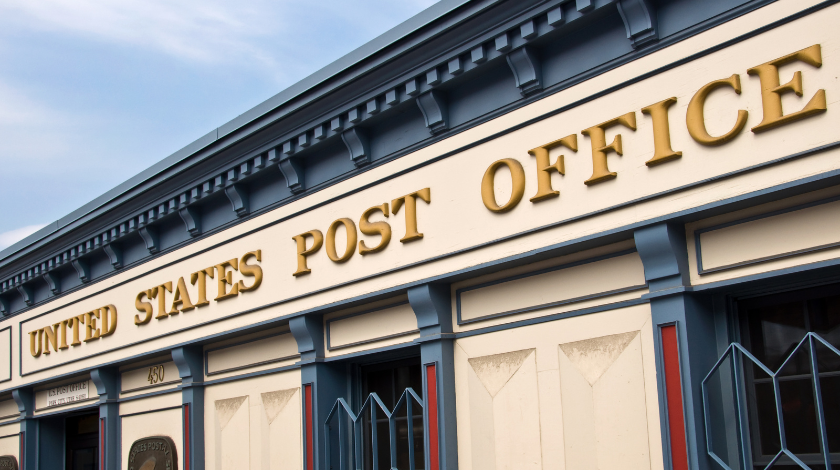
I still remember the day I walked into my neighbourhood post office and saw the notice taped to the door. It wasn’t fancy—just a standard government form with that official-looking seal—but it hit me harder than I expected. After fifteen years of buying stamps there, mailing packages to my sister across the country, and chatting with the clerks who knew my name, my local post office was closing. The sign gave us sixty days. Sixty days until a piece of our community simply vanished.
If you’re reading this, you’ve probably had a similar experience, or you’re worried you might soon. The truth is, what’s happening with US post office closings right now isn’t just a few isolated incidents. It’s part of a massive restructuring that could fundamentally change how Americans send and receive mail—and it’s hitting some communities much harder than others.
Why Are Post Offices Really Closing?
Let’s start with the numbers because they’re pretty shocking. The United States Postal Service has been bleeding money for twenty straight years. In 2024 alone, they lost $9.5 billion. That’s billion with a “B.” Postmaster General David Steiner recently told Congress that without major changes, the USPS will run out of cash in less than twelve months. Think about that for a second—the organisation that delivers mail to every single address in America, that processes millions of letters and packages daily, is on the verge of insolvency.
But why now? Haven’t we had email for decades? Yes, but the problem goes deeper than just people sending fewer letters. The USPS has been caught in a perfect storm of declining mail volume, rising operational costs, and congressional mandates that limit its operations. Back in 2006, Congress passed a law requiring the Postal Service to pre-fund retiree health benefits decades in advance—a requirement no other government agency or private company faces. That alone costs billions annually.
Then there’s the “Delivering for America” plan, launched in 2021 by former Postmaster General Louis DeJoy. On paper, it sounds reasonable: modernise facilities, consolidate operations, invest in new equipment, and get the USPS back on solid financial footing. The plan calls for investing billions in infrastructure while cutting costs through efficiency measures. But here’s where it gets controversial—those “efficiency measures” often mean closing facilities and reducing services, especially in areas that don’t generate much revenue.
What many people don’t realise is that there are different types of closures happening simultaneously. You have full post office closures, which get the most attention because they involve those iconic buildings with the eagle logo. But there’s also a wave of Contract Postal Unit (CPU) terminations happening right now. CPUs are postal services operated inside existing businesses—your local grocery store, pharmacy, or hardware store. They provide stamps, accept packages, and offer basic postal services, but store employees, not USPS workers, staff them. These contracts can be terminated with just 120 days’ notice, and that’s exactly what’s happening across seven states right now: Arizona, Illinois, Ohio, Oregon, Pennsylvania, South Dakota, and Washington.
The USPS claims these CPU closures make sense because “nearby post offices operated by the Postal Service are capable of serving the community directly”. But here’s what they don’t tell you: those nearby offices might be ten miles away, have reduced hours, or already be overwhelmed with customers. In Sioux Falls, South Dakota, the closure of CPU locations inside Lewis Drug and Hy-Vee stores will leave just two postal locations for the entire city—one of which is already notorious for long lines.
Who Gets Hurt the Most?
If you live in a major city with multiple post offices, a UPS Store on every corner, and reliable internet for online shipping, you might wonder what the big deal is. But for millions of Americans, losing their local post office isn’t an inconvenience—it’s a crisis.
Rural communities are getting hit the hardest, and the statistics tell a sobering story. While rural areas contain only 16% of America’s population, they house 57% of all post offices and cover 88% of the territory the USPS serves. Nearly two-thirds of rural post offices cost more to operate than they bring in revenue, compared to just 7% of urban locations. This isn’t because rural post offices are mismanaged; it’s because serving spread-out populations over vast distances is inherently expensive.
I spoke with a third-generation farmer from southeastern Missouri, Kyla Estes, who lives about five miles from the nearest town and 15 miles from anything resembling a city. Her post office is only open four hours a day on weekdays and one hour on Saturdays. She told me about ordering a dress for her daughter’s Christmas concert that never arrived on time, and when it finally showed up, the package was so damaged that she received a shipping label instead of the actual dress. Stories like hers are becoming increasingly common.
But it’s not just about convenience. For rural residents, the post office is often the only link to essential services. It’s where they receive prescription medications, government checks, legal documents, and business correspondence. Many rural small businesses rely entirely on USPS for shipping products to customers. Unlike private carriers like UPS and FedEx, which charge extra fees for rural delivery and often hand off packages to USPS for final delivery anyway, the Postal Service delivers to every address at the same price.
Small businesses get hurt, too. A Brookings Institution study found that more than 60% of small businesses visit USPS retail locations two to four times per month, compared to roughly 50% for UPS and FedEx. These businesses cite convenient locations, competitive pricing, and knowledgeable staff as primary reasons for choosing USPS. When a post office closes, these businesses face higher costs, longer travel times, and potential loss of customers who relied on that convenient location.
Elderly residents and people with disabilities face particular challenges. Many cannot easily drive long distances to alternative locations. For someone using a wheelchair or walker, a trip that seems short on a map can be a major undertaking. The post office isn’t just a building to these folks—it’s a lifeline that keeps them connected to family, medical care, and the outside world.
What’s Actually Happening Right Now
The current wave of closures isn’t happening in a vacuum. It’s part of several interconnected changes that are reshaping mail service across America.
First, there’s the CPU termination wave I mentioned earlier. These closures are happening quietly, often with little public notice beyond a sign on the door. Business owners who’ve operated these contract units for decades are receiving termination letters with minimal explanation. In Tacoma, Washington, one CPU operator at Rankos Stadium Pharmacy organised a petition to save their location, but the 120-day notice period doesn’t leave much time for community organising.
Then there’s the “Regional Transportation Optimisation” plan, which sounds benign but has serious implications. This plan would end afternoon mail collections at post offices more than 50 miles from regional processing hubs like Kansas City, St. Louis, Des Moines, and Omaha. The USPS estimates this could save over $3 billion, but the Postal Regulatory Commission found it would delay first-class mail delivery to six days or more for many rural customers.
There’s also a distinction between post office suspensions and permanent closures that many people don’t understand. A suspension occurs when operations temporarily stop due to emergencies, lease terminations, staffing shortages, or building damage. By law, these suspensions must be resolved within 180 to 280 days, either by reopening or permanently closing the facility. But many post offices have remained suspended for years, creating uncertainty for communities.
The Postal Regulatory Commission recently launched a dashboard to track these suspensions, showing locations that have been in limbo for extended periods. Some communities have been without regular postal service for years while the USPS decides whether to reopen or permanently close its facility.
The Hidden Costs Nobody Talks About
When we talk about post office closures, the conversation usually focuses on the immediate inconvenience: longer drives, longer lines, higher shipping costs. But the real impacts go much deeper and last much longer.
For small towns, a post office is often the last remaining federal presence. It’s a symbol that the government still remembers you exist. When it closes, it sends a message that the town is dying, which becomes a self-fulfilling prophecy. Property values decline. Young families choose to live elsewhere. Businesses relocate to areas with better services. The post office might not directly cause a town’s death, but its closure is often the final nail in the coffin.
There’s also an economic ripple effect that’s hard to quantify but easy to observe. When residents have to drive farther for postal services, they spend more on gas and wear and tear on their vehicles. They lose time that could be spent working or with family. Small businesses face higher shipping costs, which either eat into their profits or get passed on to customers, making them less competitive.
The privatisation debate adds another layer of uncertainty. President Trump has discussed bringing the USPS under the Department of Commerce, effectively ending its independence as a self-governing agency. A task force during his first term warned that privatisation would particularly hurt rural service. Private companies aren’t required to serve unprofitable areas, and they typically charge more for rural delivery. If USPS becomes profit-driven, the universal service obligation—that promise to deliver to every address at the same price—could disappear.
What Can You Do About It?
If you’re facing a post office closure in your community, you’re not powerless. Several strategies have worked for other communities, though success requires persistence and organisation.
First, understand your rights. Federal law prohibits the USPS from closing small post offices solely because they operate at a deficit. They must consider community impact, access to alternative services, and the effect on rural residents. When the USPS proposes a closure, they must follow specific procedures, including public notice, community meetings, and appeals processes. Many closures happen because communities don’t know they can fight back.
Organising matters. Form a committee, start a petition, contact local media, and involve your elected representatives. Senators Mike Rounds and Richard Durbin recently reintroduced the Postal Processing Protection Act, which would require the USPS to consider rural impacts when closing processing facilities. This kind of legislative pressure works, but it requires constituents to make their voices heard.
Consider alternatives, but be realistic. Village post offices, which are essentially CPUs operated by local businesses, can sometimes replace full-service post offices, though they offer limited services. Some communities have successfully lobbied for reduced-hour operations rather than full closures. Others have negotiated with the USPS to maintain PO box services even if retail operations move elsewhere.
Digital alternatives can help with some services. Online postage, package pickup services, and mail forwarding can reduce the need for physical visits to the post office. But these solutions don’t work for everyone, particularly elderly residents or those without reliable internet access.
The Future: Three Scenarios
Looking ahead, there are three basic paths the USPS could take, and each has very different implications for post office closures.
The first scenario is full privatisation or absorption into a government department with a profit mandate. In this future, expect mass closures of rural and unprofitable locations, significant price increases for rural delivery, and a two-tiered system where urban areas get good service and rural areas get whatever private companies are willing to provide.
The second scenario is a government bailout combined with congressional reforms. This would involve lifting the debt cap, eliminating the pre-funding requirement for retiree benefits, and potentially providing direct subsidies for rural service. This path could preserve the universal service obligation, but requires political will that may not exist.
The third scenario is a hybrid model where the USPS continues its current trajectory of managed decline—closing facilities, reducing services, and slowly transitioning to a leaner operation focused on package delivery rather than mail. This is essentially what the “Delivering for America” plan envisions, though whether it can achieve financial stability without destroying the service remains to be seen.
Postmaster General Steiner told Congress that maintaining current service levels—six-day delivery and 33,000 post offices—requires either higher postage rates or taxpayer subsidies. The question facing America is whether universal postal service is a public good worth paying for, or an outdated relic of a pre-digital age that should be allowed to wither away.
Conclusion
The closing of your local post office isn’t just about losing a place to buy stamps. It’s about losing a piece of American infrastructure that has connected communities for generations. It’s about whether we believe that every American, regardless of where they live, deserves affordable access to communication and commerce.
The USPS is at a crossroads, and the decisions made in the next few years will determine whether it survives as a universal service or becomes just another delivery company serving only profitable areas. For rural Americans especially, the stakes couldn’t be higher.
If your post office is threatened, get involved. Attend meetings, contact your representatives, and make noise. The USPS is required to listen to community input, but only if that input is provided. Silence is consent, and too many communities have stayed silent until it was too late.
The post office has been part of American life since before the Declaration of Independence. Whether it survives another 250 years depends on whether we decide it’s worth saving.
Frequently Asked Questions
Q: Why is the USPS closing so many post offices now? A: The USPS has lost money for 20 consecutive years, with a $9.5 billion loss in 2024 alone. They’re facing a cash crisis and cutting costs by closing facilities, particularly Contract Postal Units and underperforming locations. They’re also implementing the “Delivering for America” plan, which aims to modernise operations but involves significant consolidation.
Q: What’s the difference between a post office closure and a suspension? A: A closure is permanent, while a suspension is temporary. Suspensions happen due to emergencies, lease terminations, staffing shortages, or building damage. By law, suspensions should be resolved within 180-280 days by either reopening or permanently closing, but many remain suspended for years.
Q: Can the USPS legally close my rural post office? A: They can, but not solely because it’s losing money. Federal law prohibits closing small post offices solely because they operate at a deficit. They must consider community impact, access to alternatives, and effects on rural residents. However, they can close offices for reasons other than lease terminations or facility issues.
Q: What is a Contract Postal Unit (CPU)? A: A CPU is a postal service operated inside another business (grocery store, pharmacy, etc.) by that business’s employees, not USPS workers. They offer basic services such as stamp sales and package acceptance. CPUs can be terminated with 120 days’ notice, and many are currently being closed across multiple states.
Q: How does USPS privatisation affect post office closures? A: Privatisation would likely accelerate closures in rural and unprofitable areas. Private companies aren’t required to serve unprofitable locations and typically charge more for rural delivery. This could end the universal service obligation that guarantees affordable mail delivery to every address.
Q: What can I do if my post office is closing? A: Organise your community, contact elected representatives, attend public meetings, and file formal appeals. Federal law requires community input during the closure process. You can also propose alternatives, such as reduced hours or village post offices, instead of a full closure.
Q: Will mail delivery stop if my post office closes? A: No, delivery to your address will continue, but you’ll need to travel farther to access retail services like buying stamps, mailing packages, or renting PO boxes. In some cases, your delivery route might change, potentially affecting timing.
Read Also: Great Plains Zoo & Delbridge Museum